
Vault & Vale

Object care

Caring for antiques and collectibles: handling and storage

Older objects are easiest to harm in the minute before you move them. This page offers general, cautious thinking about handling, placement and knowing when to stop. It is not a repair guide, and it is not a conservation service.

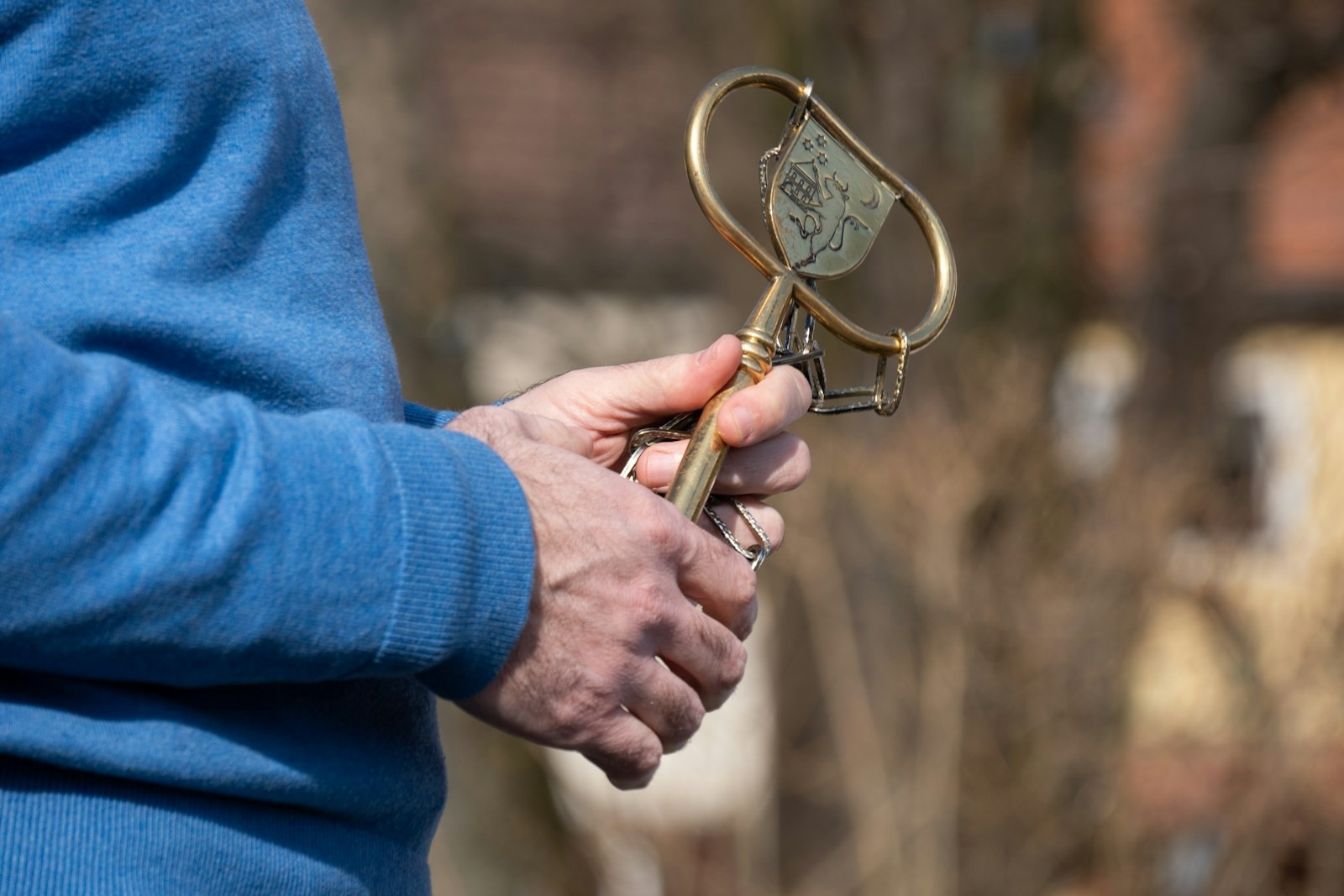
A hand holding a small golden key, supported in an open palm
Illustrative stock photograph of a hand holding a small object; not an available item.

Before you pick anything up

Look first, then lift. Check what the object seems to be made from, whether any part is already cracked, loose, flaking or previously mended, and where its weight actually sits. Mixed materials, such as wood with metal fittings or glass with a painted surface, can react differently to being held and moved.

Plan the move before you start. Clear the destination, remove rings and watches that might catch, and make sure your hands are clean and dry. Support the object from underneath with both hands rather than by a handle, rim, lid or any projecting part, since those are often the weakest points.

  • If you cannot tell what it is made from, treat it as fragile.
  • Existing damage can fail without warning when the object is lifted.
  • Carry one object at a time, with a clear path and a prepared place to put it down.

Where an object lives matters

Choose a stable, steady position. Avoid edges, busy walkways, wobbly shelves and places where doors, pets or children can knock into things. A solid surface with the object well back from the edge is a sensible starting point.

Think about light, moisture and access. Strong direct sun, radiators, damp walls and frequently opened windows can all be unkind to older materials, and sudden changes tend to be harder on objects than steady surroundings. Different materials respond differently, so we do not offer fixed figures here.

  • Steady surroundings are usually kinder than frequent change.
  • Keep objects away from direct sun, heat sources and damp walls.
  • Make sure you can reach an object without stretching or moving others first.

When to stop and ask a conservator

Pause if you notice a crack, a loose joint, a lifting or flaking surface, a detached part or an unfamiliar residue. Handling, tidying or testing a cleaning product can make these problems worse and may remove evidence a specialist would find useful.

In these cases, a qualified conservator is the right person to consult. Vault & Vale does not offer conservation or restoration, and we cannot assess damage from a description. We can help you word an enquiry about an object you are considering, but treatment decisions belong with a qualified professional.

  • Do not test cleaners or adhesives on an object you are unsure about.
  • Loose parts and unstable surfaces call for professional advice.
  • Keep any detached pieces safe and note where they came from.

Describing an object when you ask

A short, plain description helps a question get a useful answer. Say where the object is now, what visible issues you have noticed, and what you plan to do with it, whether that is moving it, displaying it or putting it into storage.

If your question concerns a book, the book care page covers support, shelving and light in more detail. For anything else, the form below turns your notes into a draft for your own email app.

  1. Name the object and where it currently sits.
  2. List any visible damage, repairs or loose parts.
  3. Say what move, display or storage you have in mind.

Build a care question for your object

Choose the situation closest to yours. The example explains what to check first and offers a question you can adapt. Nothing is sent from this page.

Moving an object across a room

Before lifting, identify the weakest points, such as handles, lids or thin necks, and plan to support the weight from below. Note any existing cracks or loose parts so they are not a surprise mid-move.

I plan to move this object across a room. It has a visible crack near the base. Is there anything I should consider before lifting it?

Choosing a spot to display it

Consider how stable the surface is, how close the object sits to the edge, and whether sun, heat or damp reaches that spot. Mention what the object seems to be made from, even if you are unsure.

I would like to display this object on a shelf near a window. I am unsure of the material. What should I think about regarding light and position?

Storing it for a while

Storage questions are clearer when you say where it would be kept, how long for, and whether the object has parts that could shift or rub together. Keep any loose pieces noted rather than discarded.

I need to store this object for several months in a spare room. It has a detachable lid. What should I consider before putting it away?

Copy the draft into an email to [email protected]. Open your email app to review the message. If your text is not included, copy it manually. Nothing is sent or stored by this page.

Open your email app ↗

Your draft stays on this page. Read an example, edit the draft, or copy it into your own email app.

Vault & Vale / Correspondence

Ask about a particular object

If you have a specific question about handling or storing an object, write it down and prepare an email. It opens in your own email app, so you can edit it before deciding whether to send it.

Prepare an object care enquiry ↗