Vault & Vale
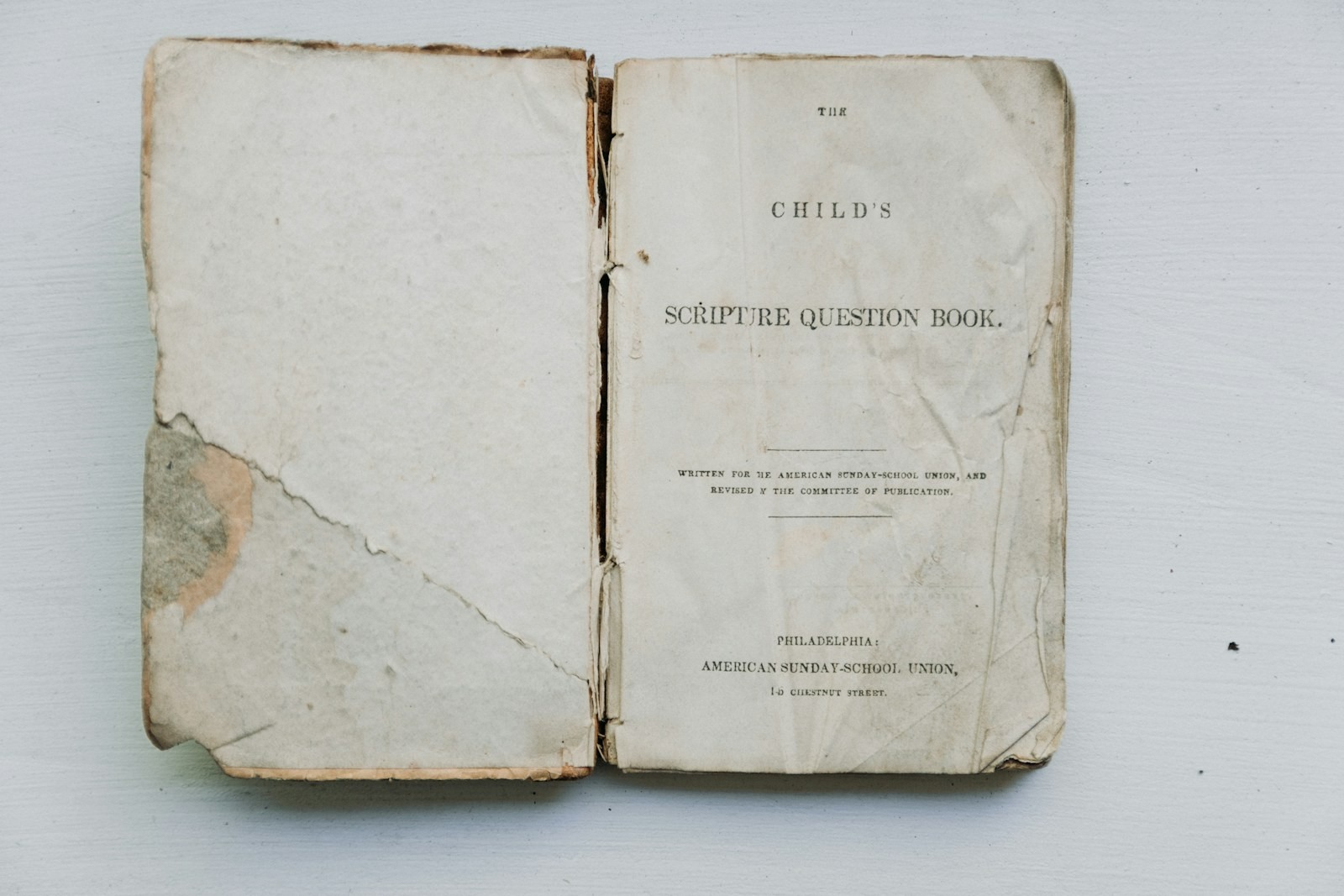
An old book lying open on a pale surface, its printed title page on the right and a worn, damaged leaf on the left
Illustrative stock photograph of a printed title page; not a book offered by Vault & Vale.

Books · Publication evidence

Editions and publication details in older books

An edition description should rest on what is printed in the copy itself. This page shows which details to copy down, what makes an edition statement useful, and which views to ask for before you rely on one.

What to copy from the book

Start with the title page, which is usually the fullest statement a book makes about itself. Record the author and the title exactly as printed, including any subtitle, spelling and punctuation, rather than the shortened form used on the spine or in a catalogue.

Then note the publisher or printer, the place and the date if they appear. Copy any wording about printing or editions word for word, such as a numbered edition, a revised or enlarged edition, or a line recording a reprint. Wording that is copied accurately can be compared; wording that is paraphrased cannot.

  1. Copy the title and author as printed, not as remembered.
  2. Record publisher, place and date only where they actually appear.
  3. Quote printing and edition wording exactly.

What supports an edition description

A date on its own does not settle which edition a copy is. Later printings can carry earlier dates, and a copy may differ from another of the same title in small ways. A description is more convincing when it names the copy-specific details behind it: the statements on the title page, the reverse of the title page, and any features that distinguish this copy from others.

So the useful question is not whether a book is a particular edition, but what in this copy shows it. Treat a first-edition, scarce or valuable label as a claim that needs that support, never as something a date or a general reputation can supply.

  • A date alone does not identify an edition.
  • Ask which details in this copy support the description.
  • Be cautious of labels that arrive without evidence.

Which pages and details to request

A short, specific list of views is easier to answer than a general request. Ask for the title page, the reverse of the title page, and any page carrying publisher, printing or date information. If the copy has an advertisement leaf, a half-title, a frontispiece or a colophon, those can be worth asking about too.

Add anything the copy does that you would expect to check, such as binding details, labels or inscriptions that bear on its identity. There is no single rule that identifies every book, so ask for what is relevant to the title you have in mind and say what you are comparing it with.

  • Request the title page and its reverse first.
  • Add printing, colophon or other statements if present.
  • Say what you are comparing so the views fit the question.

How to ask about a copy

A good enquiry gives the title and author, quotes the statements you have already seen, and lists the views still missing. The draft below pulls those parts together and you can edit every line before you use it.

Questions about the physical state of the copy are better kept separate; the book condition and completeness page covers those. When you are ready, the text opens in your own email app so you can review it and send it to [email protected] yourself. Nothing is sent from this site.

Book condition and completeness ↗
  • Name the title, author and any wording you have seen.
  • List the views you still need.
  • Keep condition questions in a separate message.

Choose a detail to ask about

Select a situation to see why the detail matters and a sample question. The examples are hypothetical and are guidance for you, not results for any book.

The title page wording

Why it mattersThe title page is the main printed statement of what the book is. Spelling, subtitle and any edition wording can differ between copies of the same work, so an exact transcription helps.

Sample requestCould you show the full title page and say whether the wording matches the title and author I have quoted?

A printing or edition line

Why it mattersA line recording a numbered edition or a reprint can change how a copy is described. It needs to be read as printed, as an earlier date does not mean an earlier printing.

Sample requestIs there a printing or edition statement on the title page or its reverse, and could you quote it exactly?

A feature that sets the copy apart

Why it mattersSome copies carry a particular binding, a frontispiece or an inscription that bears on identity. Asking about it keeps the description tied to this copy and not to the title in general.

Sample requestWhich features of this copy support the edition description given, and can you show them?

Copy the draft into an email to [email protected]. Open your email app to review the message. If your text is not included, copy it manually. Nothing is sent or stored by this page.

Open your email app ↗

Your draft stays on this page. Read a field, edit the draft, or copy it into your own email app.

Vault & Vale / Correspondence

Ask about the details of a particular copy

Bring the title, author and any wording you have copied. The enquiry page prepares your message in your own email app for you to review and send.

Prepare a publication enquiry ↗